
Best Chorus Pedals: Analog, Digital & Budget Picks
Posted by Jon Cusack on 26th Oct 2026
Best Chorus Pedals: Analog, Digital & Budget Picks
A good chorus pedal can make a single guitar sound like it was doubled in a studio. It adds width to clean tones, shimmer to arpeggios, and a little motion to rhythm parts that would otherwise sit still. The tricky part is that “chorus pedal” covers a lot of ground. Some are simple two-knob analog boxes, others are stereo digital units with multiple modes, and a few hide a chorus inside a delay or reverb.
This guide explains how a chorus pedal works, how analog and digital designs differ, what to look for at different budgets, and how to pair chorus with delay and reverb so the effects help each other instead of turning your tone to mud. We also cover which Cusack Music pedals can do chorus-style sounds, since the lineup takes a different approach than a dedicated chorus box.
What a Chorus Pedal Actually Does
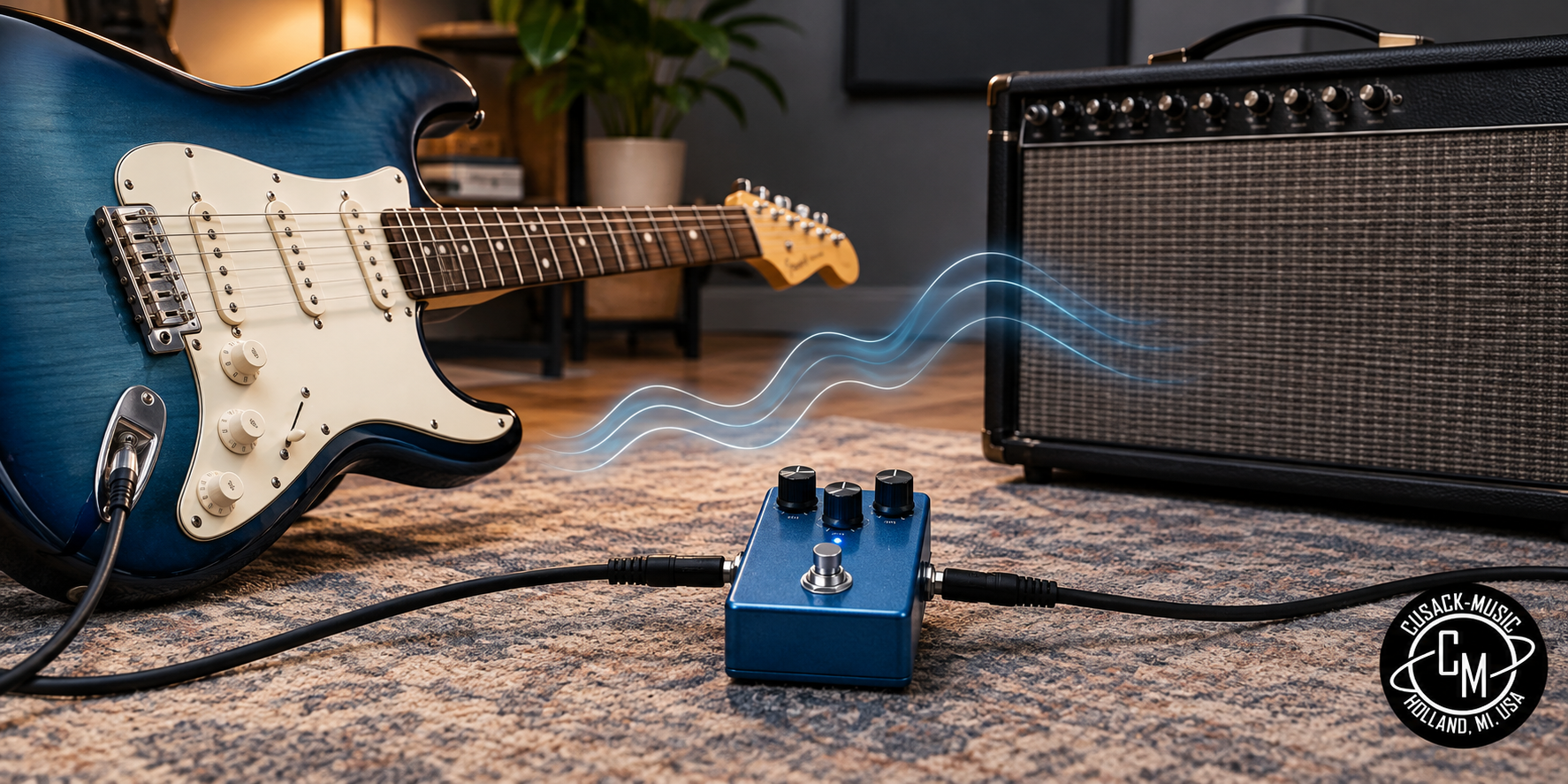
The chorus effect works by blending your dry signal with a slightly delayed copy. A low-frequency oscillator (LFO) constantly nudges that delay time, which makes the copy drift a little sharp and flat against the original. Your ear hears two instruments that are almost, but not quite, in tune with each other, and that gap creates the thick, swirling sound.
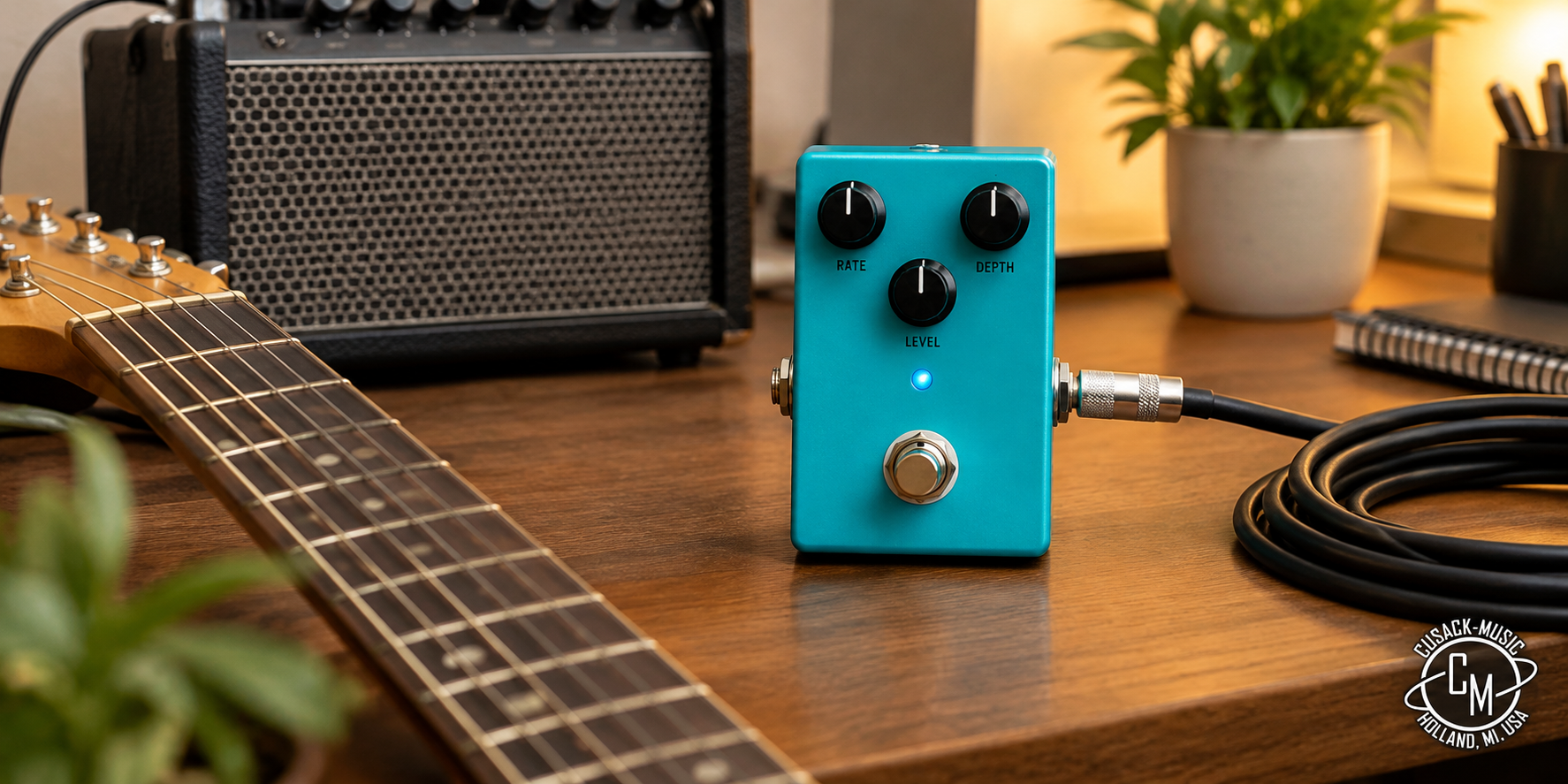
Most chorus pedals share a few core controls:
- Rate: how fast the LFO moves the delay time.
- Depth: how far the delay time swings, which sets how obvious the wobble is.
- Level or Mix: how much of the effected signal is blended in.
- Tone or EQ: found on some models, used to roll off or brighten the effected signal.
Push rate and depth high and you drift toward vibrato territory. Keep them low and you get a subtle widening that makes a clean tone feel bigger without announcing itself.
Analog vs. Digital Chorus Pedals
This is the first decision most buyers face, and neither type is simply better. They sound and behave differently.
Analog Chorus
Classic analog chorus pedals use bucket-brigade device (BBD) chips to create the delayed signal. BBD circuits tend to darken the delayed copy slightly and add a soft, organic character that many players describe as warm. If you search for the best analog chorus pedal, you are usually looking for that vintage sound, the kind associated with 1980s clean tones and 1990s alternative rock.
Strengths of analog chorus:
- Warm, slightly dark modulation that sits well behind a clean or lightly overdriven tone
- Simple controls that are quick to dial in
- A familiar sound that suits classic styles
Trade-offs:
- Fewer modes and features
- Often mono only, though some models offer stereo output
- Some background noise at high settings, depending on the design
Digital Chorus
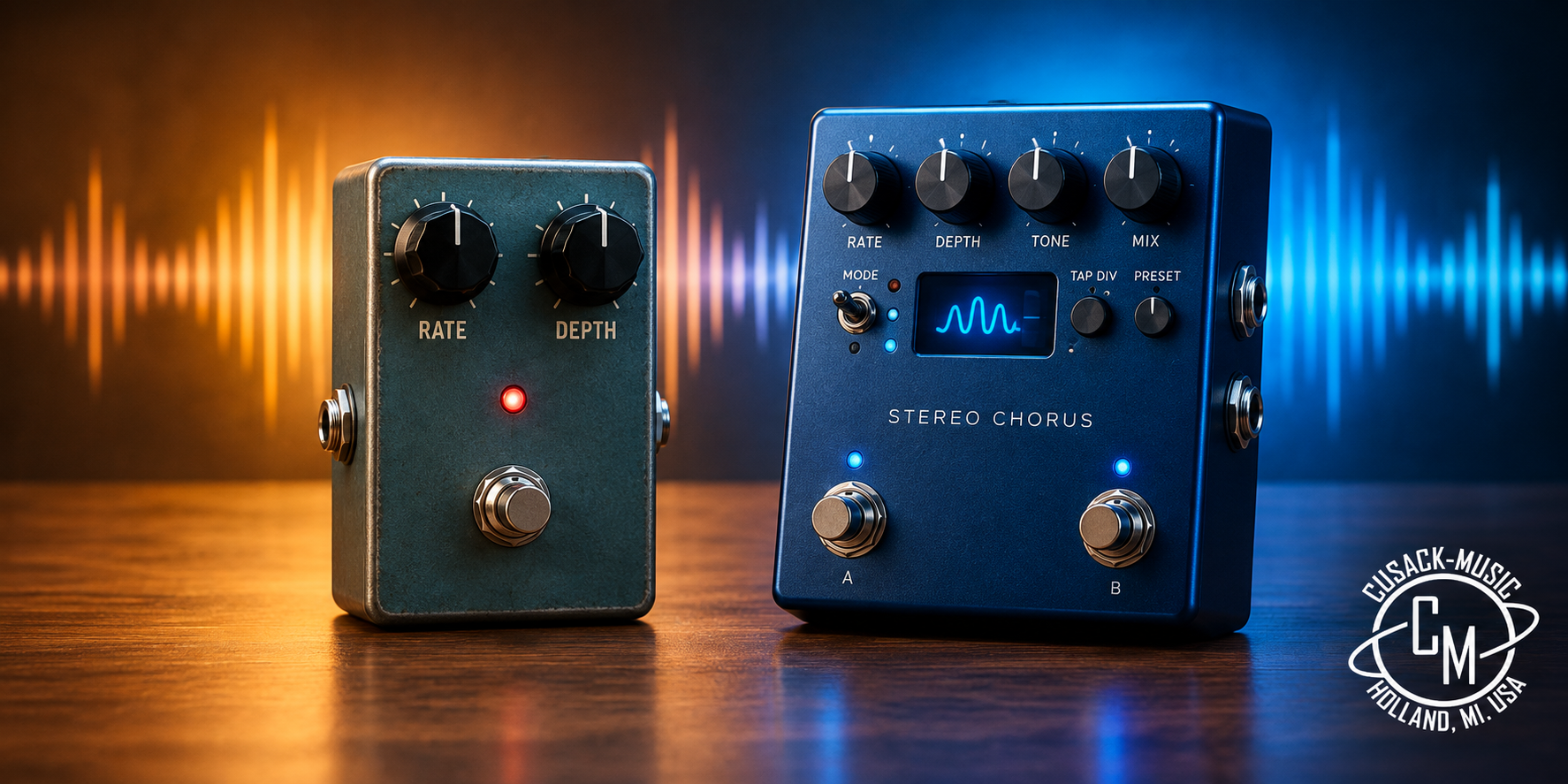
A digital chorus pedal processes your signal through a digital signal processor instead of a BBD chip. That opens the door to more flexibility: multiple chorus voicings, stereo operation, tap tempo, presets, and cleaner signal paths. Some digital designs deliberately emulate BBD behavior, so the gap in sound is smaller than it used to be.
Strengths of digital chorus:
- Cleaner, more transparent sound when you want it
- More modes, presets, and stereo options
- Often quieter at high rate and depth settings
Trade-offs:
- Some players find it less characterful than analog
- More controls can mean a longer setup process
If you play mostly clean or edge-of-breakup tones and want a vintage flavor, start with analog. If you gig with stereo rigs, switch between sounds mid-set, or record and want a transparent result, a digital chorus is worth a serious look.
How to Choose a Chorus Pedal
Before comparing brands, work through these questions.
Mono or stereo?
A stereo chorus sends different modulation to each side, which creates real width across two amps or a stereo PA feed. If you only run one amp, mono is perfectly fine. If you record direct or play through two amps, stereo is a big upgrade.
How many controls do you need?
A rate-and-depth pedal is fast and intuitive. A multi-mode unit gives you more range but takes longer to learn. Think about whether you want to tweak mid-gig or set it once and forget it.
Will it share a board with delay and reverb?
Chorus is often used alongside both. If board space is tight, a pedal that combines effects, or a delay or reverb with a built-in chorus program, can save room and cables.
What is your power situation?
Check voltage, polarity, and current draw against your supply. Most pedals use a standard 9V DC, center-negative supply, but digital pedals can draw noticeably more current than simple analog ones.
Chorus Pedals by Category
Rather than pretend there is one winner for every guitarist, it is more useful to think about what each type does well. The pedals below are widely used examples, listed for context. Specs and pricing change, so check each manufacturer’s page for current details.
Analog Chorus Examples
The Boss CE-2 is one of the best-known analog chorus designs, with simple rate and depth controls and a sound that shaped decades of clean guitar tones. The Electro-Harmonix Small Clone is another classic, known for its lush, deep modulation and its place in rock history. Both are good reference points if you want to hear what a vintage-style chorus is supposed to sound like.
Digital Chorus Examples
The Strymon Ola is a well-regarded digital option that models BBD-style chorus and vibrato with more control than a basic analog box. If you want stereo options, multiple voicings, and a more modern feature set, this is the kind of pedal to compare against.
The Best Budget Chorus Pedal: What to Look For
If you are searching for the best budget chorus pedal, brands like Mooer, Donner, Joyo, and Behringer all make affordable chorus options. At this price level, focus on a few practical things:
- A solid, quiet true bypass or buffered bypass design
- Rate and depth controls that stay usable across their whole range, not just in a tiny sweet spot
- Sturdy jacks and a metal enclosure if you gig regularly
- Honest reviews from players who use the pedal in a real band context
A budget chorus can sound great, especially for bedroom practice, recording demos, or learning what chorus does before spending more.
Chorus With Delay and Reverb
Chorus rarely lives alone. Most players pair it with time-based effects, and the order of those pedals matters.
Chorus and Delay Together
A delay and chorus pedal combination, or a single chorus delay pedal, creates the swirling, dreamy sound common in ambient, post-rock, and 80s-inspired playing. The classic approach is placing chorus before delay, so the delay repeats the already-modulated signal. Reverse the order and each repeat gets modulated, which sounds wetter and more chaotic. Neither is wrong, but chorus first is the more predictable starting point.
Digital delay is also a natural partner for chorus. Its clean repeats keep the modulation clear, while an analog or tape-style delay adds darker, softer repeats. If you are experimenting with a pedal chorus delay setup, keep the delay mix lower than you think you need and add chorus depth gradually.
Chorus and Reverb Effects
Chorus and reverb effects also blend beautifully. A chorus before a reverb gives you a wide, shimmery bloom that suits clean arpeggios and slow ballads. Be careful with long decay times and high chorus depth together, since too much of both can smear note definition.
One approach that avoids this is running the two effects in parallel instead of in series, so the chorus and reverb do not stack on top of each other. That is exactly how the Modulated program on the Cusack Resound V2 works, which we cover below.
Reverb Pedals to Pair With Chorus
Since chorus and reverb are such a common pairing, here is a quick guide to the reverb side.
Spring Reverb and Plate Reverb
Spring reverb has a splashy, slightly metallic character associated with vintage amps, and it works well with chorus on surf, blues, and indie tones. Plate reverb is smoother and denser, and it tends to sit more neatly behind vocals and clean chords. Both pair well with chorus, as long as you keep the mix level in check.
What Makes a Good Reverb Pedal for Guitar
If you are shopping for a good reverb pedal or comparing good reverb pedals for guitar, look at:
- The range of reverb types (spring, plate, hall, room, and so on)
- Whether the pedal supports stereo reverb pedals operation with left and right outputs
- Preset or program switching if you change sounds between songs
- Expression pedal input for real-time control
If you are looking for cool reverb pedals that go beyond the standard hall and spring, features like freeze, swell, and shimmer programs open up creative territory that basic reverbs cannot reach.
Where Cusack Music Fits In
Cusack Music is known for delay, reverb, overdrive, fuzz, and tremolo, and its current Modulation category focuses on tremolo and phaser-style effects. There is no dedicated chorus pedal in the lineup today. That said, two Cusack pedals include chorus-style sounds inside their programs, and they are worth knowing about if you want chorus alongside delay or reverb.
Resound V2: Reverb With a Chorus Program
The Resound V2 is a programmable reverb with eight programs, including room, plate, cathedral, spring, hall/freeze, swell, and shimmer. Program four is called Modulated, and it combines chorus and reverb with the two effects running in parallel rather than in series. According to Cusack, that makes the pairing clearer and more usable than stacking the two effects one after the other.
Other details that matter for chorus and reverb players:
- Dedicated left and right outputs for stereo use
- An expression pedal input
- A preset system with left and right sides, plus an Extend feature that lets you push decay further on either preset
- A standard 9V DC, center-negative supply, with current draw of about 85mA
You can also read the Resound V2 manual before deciding if it fits your board.
Rebound: Multi-Program Delay With a Modulated Mode
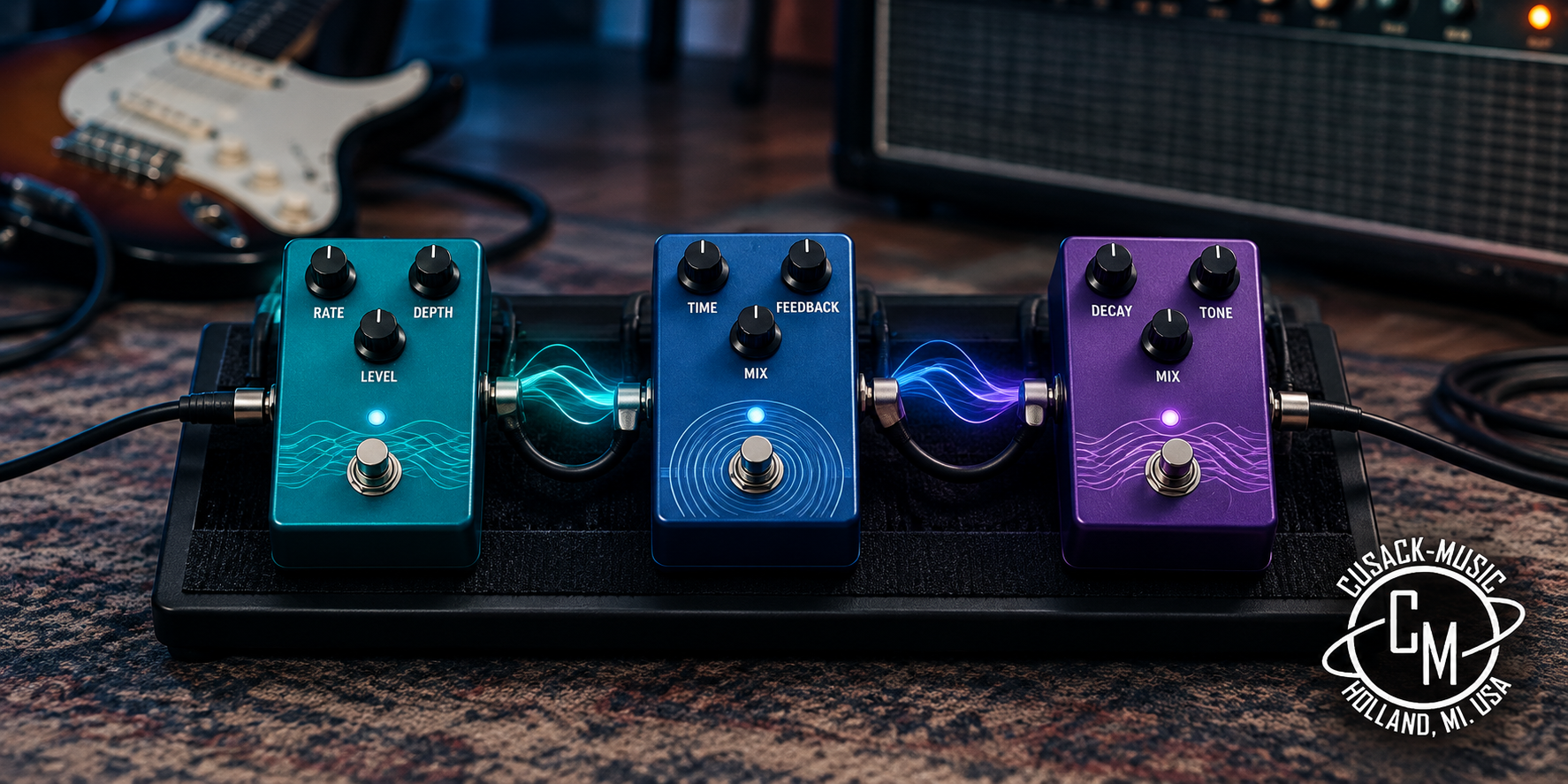
The Rebound is a multi-program delay with eight stand-alone programs, tap tempo, a hold feature called Float, and left and right outputs. Its first program, Mod - Analog, offers a controllable depth of modulation that Cusack describes as ranging from smooth chorus to throbbing vibrato. If you want swirling, modulated repeats rather than a standalone chorus, this is the program to explore.
For a broader look at the lineup, browse the full Delay & Reverb category.
Chorus Pedal Setup and Troubleshooting Tips
A few practical tips can save you time at rehearsal or on stage.
Tone feels thin when the chorus is on. Some choruses reduce low-end weight. Turn the effect level down slightly, or try placing the chorus later in your chain so it affects a fuller signal.
The effect sounds seasick. Rate and depth are probably both too high. Lower the rate first, then bring the depth back up until it feels musical rather than distracting.
Background hiss at high settings. Noise is common with some analog designs. Check your power supply for hum, use shielded cables, and try reducing the effect level before assuming the pedal is faulty.
Chorus and reverb sound muddy together. Shorten the reverb decay, lower the mix on one or both effects, or try a parallel arrangement like the Resound V2’s Modulated program.
Stereo setups sound uneven. Make sure both outputs are connected properly and that both amps or channels are at similar volume levels.
Chorus on bass. Many bassists prefer a chorus with a blend or EQ control so the low end stays solid. Check whether a pedal is designed for bass or has a way to keep the dry signal prominent.
FAQ
Should a chorus pedal go before or after distortion?
Most players put chorus after overdrive and distortion, so the modulation is applied to the already-saturated tone. Putting it before gain can sound rougher and less defined. Experiment, since your amp and pedals will affect the result.
Can one pedal do chorus and reverb?
Yes. Some pedals offer both effects in a single enclosure. The Cusack Resound V2, for example, includes a Modulated program that blends chorus and reverb in parallel.
Is analog or digital better for a budget chorus?
Neither is automatically better at a budget price. Analog options tend to deliver a vintage feel with fewer controls, while digital options may offer more modes and stereo support. Choose based on the sound you want and the features you will use.
Do I need a stereo chorus pedal?
Only if you run two amps or record in stereo. For a single amp, a mono chorus is usually enough, though stereo output can still add width in a recording setup.
Where should chorus go in the signal chain with delay and reverb?
A common order is overdrive, then chorus, then delay, then reverb. This keeps the modulation in front of the time-based effects and generally produces the cleanest result.
Final Thoughts
The best chorus pedal depends on what you play and how you play it. Choose analog if you want classic warmth, digital if you want flexibility and stereo options, and a budget pedal if you are still learning how chorus fits into your sound. Whichever direction you go, pay attention to rate, depth, and how the pedal behaves alongside your delay and reverb.
If you want chorus-style sounds blended with other effects, explore the Resound V2 for chorus and reverb, or the Rebound for modulated delay. You can also browse the full Cusack Music pedal lineup to see how these pieces might fit on your board.